
Search
Forging culture in the ‘land of opportunity’
-
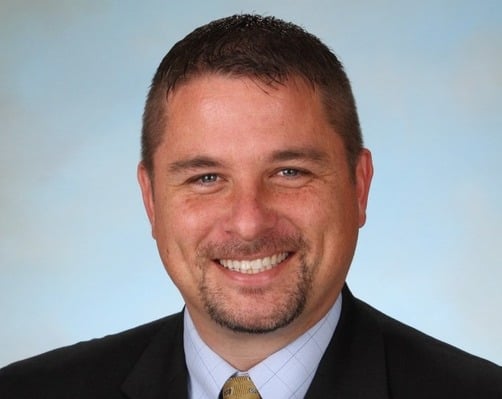 By Michael Kraus
St. Peter School
Catholic education is a great land of opportunity.
It provides educators with the opportunity to live their faith every day, to guide boys and girls in finding their God-given vocation as men and women, to coach students through both failure and success and to give witness to the love of Christ and his sacraments. After all, the heart of every Catholic school’s mission is the formation of disciples who are prepared spiritually, intellectually and apostolically to courageously answer God’s call in their lives.
Catholic school educators also carry the solemn responsibility of being the face of Christ to every student, parent and visitor. It is almost frightening to truly ponder the role of the Catholic school.
Catholic education is a ministry driven by imperfect professionals striving to answer the call to educate imperfect children from imperfect families. It is a sacred ministry, and it should be celebrated.
Combating stereotypes
Unfortunately, schools are not often seen in this light. Viral social media posts, reels, memes and videos emphasize the worst side of education: unsafe environments, harmful indoctrinations, scandalous reading lists, political activism and even abuse.
The teachers’ lounge may not be an oasis. Educators may easily vent over excessive meetings, planning time, salaries, duties, parent emails and poor morale. Catholic schools are still a place of work, and like any other, toxic environments can spill over into every layer of campus.
If Catholic education is a land of opportunity, then what determines its success? Is it high student achievement? Championships? Facilities? Accreditation? Blue Ribbons?
‘Culture’ is vital
No. The one consistent component that separates successful schools from miserable schools is culture. Culture is forged through strong and proper relationships within the school community.
Healthy relationships demand trust.
Imagine the home-buying process. There you are, standing in front of the house of your dreams.
The design – from the porch to the bay windows and even to the landscaping – is everything you want in your dream home. Then, the realtor informs you that the home has had numerous showings but no offers. The realtor insists that it’s gorgeous throughout. The truth comes to light, however, that the builders and the architects had tumultuous arguments throughout the construction process. They disagreed on code requirements and structural integrity, and a few favors were called in to bypass inspections.
If the builders and architects disagreed on load-bearing walls and structural stability, the dream of a dream house is shattered. You are quickly on to the next home.
If the harmonious and fruitful relationship between architect and builder is vital in constructing a quality home, then it follows that in the ministry of educating children, nothing is more important than cohesion from the administration to the classroom. The affiliation or relationship between the principal and teacher is the most important indicator of a school’s culture and foundational strength.
Hidden key to success
Few alumni will look back fondly at their alma mater experience and think, “Wow! My favorite teacher really gelled well with the principal!” On the contrary, school experiences are largely evaluated by readiness for high school or college and strong connections with classmates, teachers and coaches. Nevertheless, if the relationship between school leaders and teachers is poor, an educational institution inevitably will fail.
Think of your local Catholic school. If it has an outstanding reputation, we can all but guarantee it has both a strong administration and great teachers. It may be easy to find flaws or differences of opinion, but the school leaders are overwhelmingly respected and trusted.
The teachers in this quality Catholic school are loved by many families. Parents will enthusiastically boast to friends and family that they have the best second-grade teacher, the greatest ELA or math teacher! Their children were more prepared than any of their friends. The teachers made their children love to pray and sing.
A bond that lasts
But, can you have both great teachers and a great principal without a great relationship between them? Not for long.
Just as weather and time will test the foundation of any new home, principals and teachers will be challenged. Parents and students will disagree with grades or discipline. Conflicts among students or staff will shake the school’s reputation.
Schools are in the business of people, and the parts are always moving. A school’s strength depends on the entire system working together – from the principal’s office to the classrooms.
What, then, creates strong relationships and cohesion? While your master’s degree is not gift-wrapped with a script for success, there are some absolute best practices for both sides.
Principals must hire faith-loving teachers who will embody the school’s mission. They must back their teachers, address behavior problems and offer coaching strategies. If the teachers are coachable, their relationship will be rock-solid.
While principals must be able to stand firm in some areas, they also must pivot when presented with a teacher’s great ideas. Stubbornness born of insecurity or pride alienates leaders from their teachers. Principals must always remember the right order and teacher empowerment. Few things are more destructive to a school community than when an administrator changes a teacher’s decision without communicating with the teacher. This simple mistake fractures culture.
Teachers must unapologetically buy into the school’s mission and embrace adventures that might appear to roam from their safe classroom island.
Catholic education is an opportunity that may be weakened without a strong, faith-based culture and foundation that permeates every faculty meeting and every lounge, office and classroom.
Talented educators and longtime families will flee a weak school, and they will ultimately seek a stronger foundation.
Forging culture in the land of opportunity relies on the united effort of the architects and the builders, the principals and the teachers.
Michael Kraus is the principal of St. Peter School in Covington.